

Refugia News
Welcome to the all-nature edition of this newsletter! Longtime subscribers will know that I tend to cover a lot of clean energy and politics stories, so I sometimes neglect the refugia-in-nature aspect of our remit here. Not today!
OK, fine. I will do one politics/energy story. Then we shall move on, I promise.
In the Christian calendar, we have now entered the season of Lent, a time of reflection, repentance, emptying-to-be-filled with God. People observe Lent in all kinds of ways: abstaining from certain foods, recommitting to a prayer practice, reading spiritual books, memorizing scripture. This year, I’m trying to focus on the kindness of God—praying for kindness among people, but also observing the way this earth is designed for healing. I’m praying for an awakening of human (and divine!) kindness toward an earth that wants to heal.
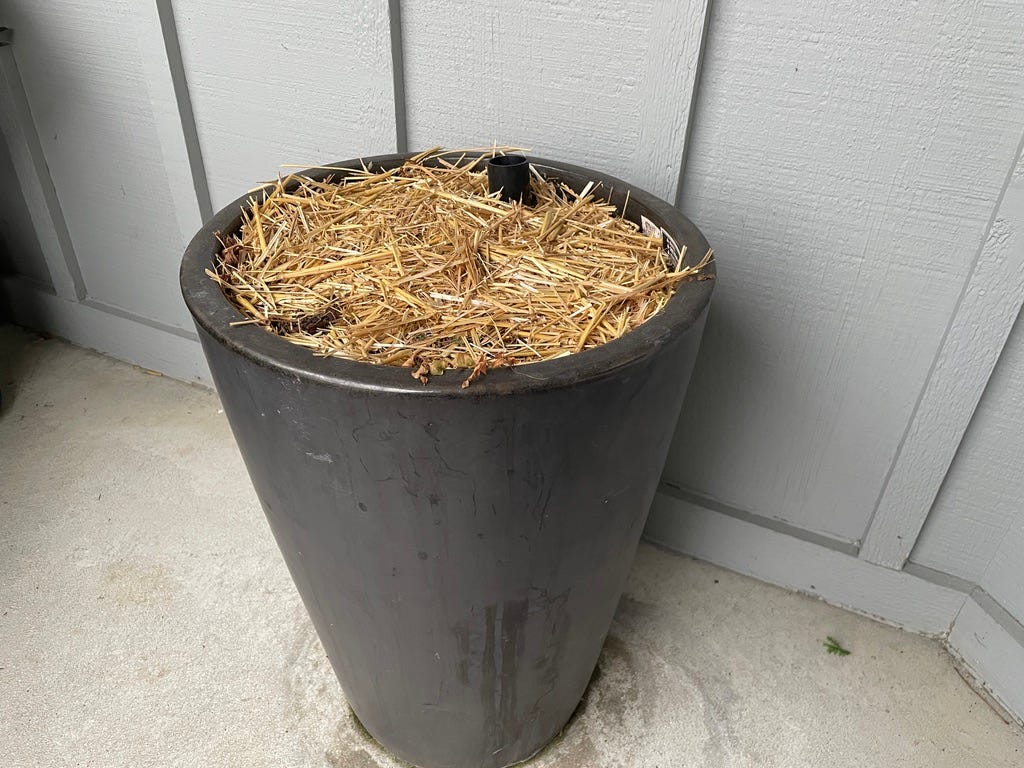
Lent is the blessed time when my lack of talent in seasonal home decorations can be excused as Lenten asceticism. Ahem.
I hope you’re finding meaningful spiritual practices to sustain you right now, whatever your tradition or commitments. If you like, I invite you to join the lovely folks at the Our Lady of the Prairie Retreat in Iowa for a little online retreat I’ll be doing on Saturday, March 14, from 10-noon Central time (link is to registration page). I’ll be trying out some material from the book I’m working on, Refugia Church.
This Week in Climate News
We have to talk about that endangerment finding decision from the EPA. We’ll keep it short. The endangerment finding is basically the directive for the EPA to regulate greenhouse gases. The legal basis for this is a 2007 Supreme Court case. Lisa Friedman and Maxine Joselow of the New York Times explain:
In a landmark 2007 case, Massachusetts v. E.P.A., the court ruled that the agency could regulate greenhouse gases under the Clean Air Act, as long as these gases were a threat to public health and welfare.
That ruling, based on the science at the time, led to the EPA’s endangerment finding: that is, greenhouse gases are a threat to public health and thus the EPA must regulate them.
On Feb. 12, the EPA rescinded the endangerment finding on the basis of … science? Ha. No. They tried that, and their attempts were ruled illegal (as I covered last time). This time the argument is based on interpretation of the Clean Air Act. The argument is basically “Nunh-uh! The Clean Air Act doesn’t say specifically to regulate greenhouse gases, so we’re not gonna!” Keep in mind the Clean Air Act was originally passed in 1963 and strengthened in 1970.
The EPA’s legal “argument” is based on the following sophisticated line of thinking:
Regulations = always bad
Corporate profits = must be worshipped
Pollution = we don’t care. See #1 and #2.
Truly, this is an ideologically driven attempt to favor fossil fuel profits over Americans’ health.
Of course, a flurry of law suits have been filed by environmental groups, health advocacy groups, and more. This moment from Marianne Lavelle’s coverage in Inside Climate News sums up the next steps:
So is this “final” decision really final?
Not in the least.
The science connecting greenhouse gases to climate change and health impacts is now even more decisive than it was in 2007. The legal argument is flimsy at best. So this will play out in the courts for a while. The danger is at the Supreme Court level, since we know the conservative majority is sympathetic to the “major questions doctrine,” which is the idea that federal agencies may only do specifically what congressionally passed laws order them to do on “major questions.”
Fascinatingly, the oil industry doesn’t necessarily want the endangerment finding rescinded. The American Petroleum Institute (the big industry group) lobbied against it. Why? Because it could ironically make the industry more vulnerable to state-level legal means of holding them accountable—it’s complicated, but explained well here.
What can you do about this? Well, support the lawsuits. I suggest supporting Earthjustice. And of course, nag your federal reps and let them know that you definitely want the EPA to regulate greenhouse gases and if they need to create and pass regulation to that effect: do it.
Deeper Dive
Now, on to good nature stories! This deep dive will go deep on this theme: when humans work in wise partnership with nature, we can restore ecosystems and biodiversity. Protecting and restoring ecosystems and biodiversity is a key strategy in mitigating the climate crisis and adapting to a warmer world. Healthy ecosystems sequester carbon better and better support all life, including human life. Plus, for people of faith, partnering in earth healing is a redemptive practice that honors the sacredness of life.
The Year the Earth Changed.
Have you seen this documentary about what happened in the animal world in 2020-21, during the pandemic quarantine? I hadn’t seen it until last week. It’s so good!
In short: during the quarantine, animals thrived like crazy all over the globe. Watching penguins and sea turtles and humpbacks and other critters breathe a sigh of relief at the downturn in human noise and commotion felt both tragic (because of how much human activity suppresses creaturely thriving) and wonderful—because it doesn’t take that much to help creatures thrive again. We’ve learned some things about which of our activities are most hurting them. Also, the cinematography is beautiful in this short film (48 minutes), and David Attenborough narrates. So there you go.
The best story, for me, was the one about elephants in India (in the last ten minutes). Elephants had started to ravage a village’s crops, so the people planted an edge-crop of rice and bamboo to give the elephants something to munch on other than their human crops. It worked! The elephants were happy to stay near the forest edge and eat the plants set out for them. “If we love the elephants, they love us back,” says one villager. Reciprocity!
Amazon deforestation down in Brazil. Brazil has been working to reduce deforestation and it seems to be working. This article by Rhett Ayers Butler in Mongabay reports on the latest satellite tracking. Butler writes:
Speaking at a press conference announcing the data last week, Environment Minister Marina Silva said the decline reflects coordinated government action. She noted that most high-deforestation municipalities have now joined federal initiatives aimed at curbing illegal clearing.
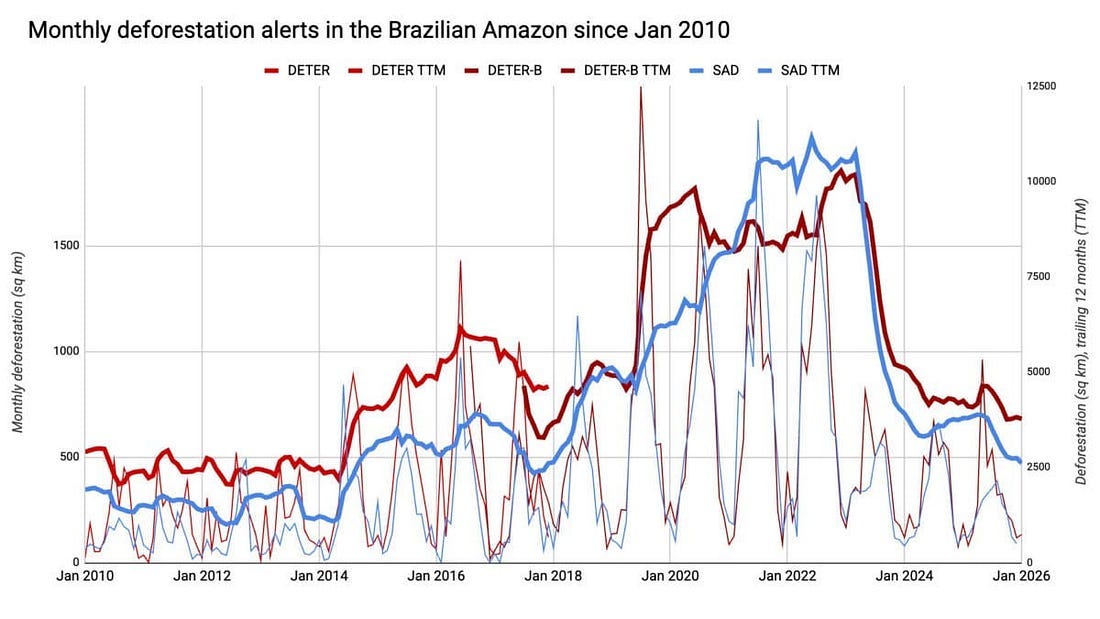
Data from INPE’s DETER and Imazon’s SAD detection systems showing deforestation in the Legal Amazon (“Amazonia”). Image by Mongabay [caption from article]
Yangtze River. To address a heavily degraded river and the collapse of the fishing industry there, the Chinese government instituted in 2021 a ten-year fishing ban on the Yangtze. It was a big deal: 200,000 fishers had to be moved and the whole thing cost $3 billion. But it worked. A 70-year decline is quickly healing, with fish biomass already doubled.
Jonathan Tonkin sees in this story two encouraging lessons: “Ambitious political decisions made for people and the environment can pay off” and “When we make space for recovery, ecosystems respond.”
Klamath River. Another good river story! This one celebrates indigenous land stewardship and activism. After decades of advocacy and pressure, four major dams were removed in fall of 2024 from the Klamath River in Oregon and California, freeing the river to support wildlife again, particularly salmon. The results have been immediate and astonishing. Lyric Aquino wrote for Underscore Native News back in October:
At a virtual press conference on Thursday, Oct. 9, Klamath River scientists announced that a year after the last of the dams were removed, river health has begun to bounce back. With salmon swimming upstream, bald eagles flying overhead, and increased bear, beaver, otter and osprey activity, the ecosystem is booming with ecological shifts thanks to the completion of the world’s largest dam removal effort.
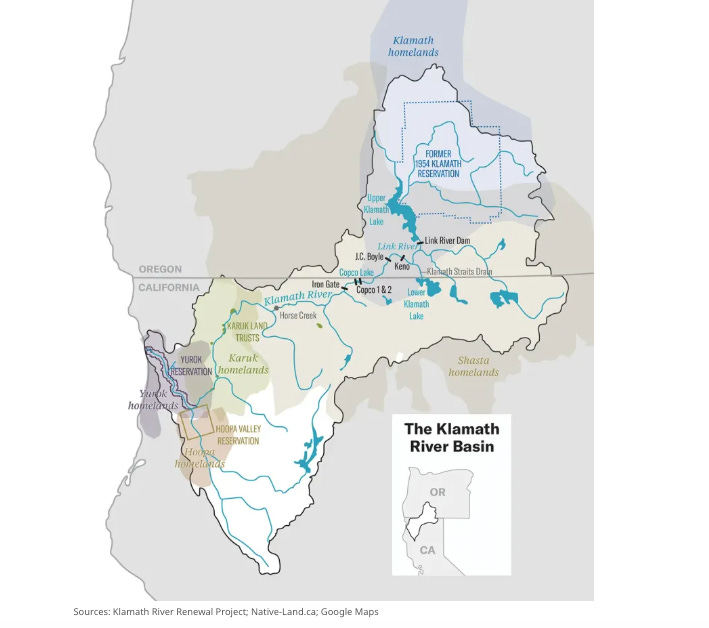
Source: Underscore Native News.
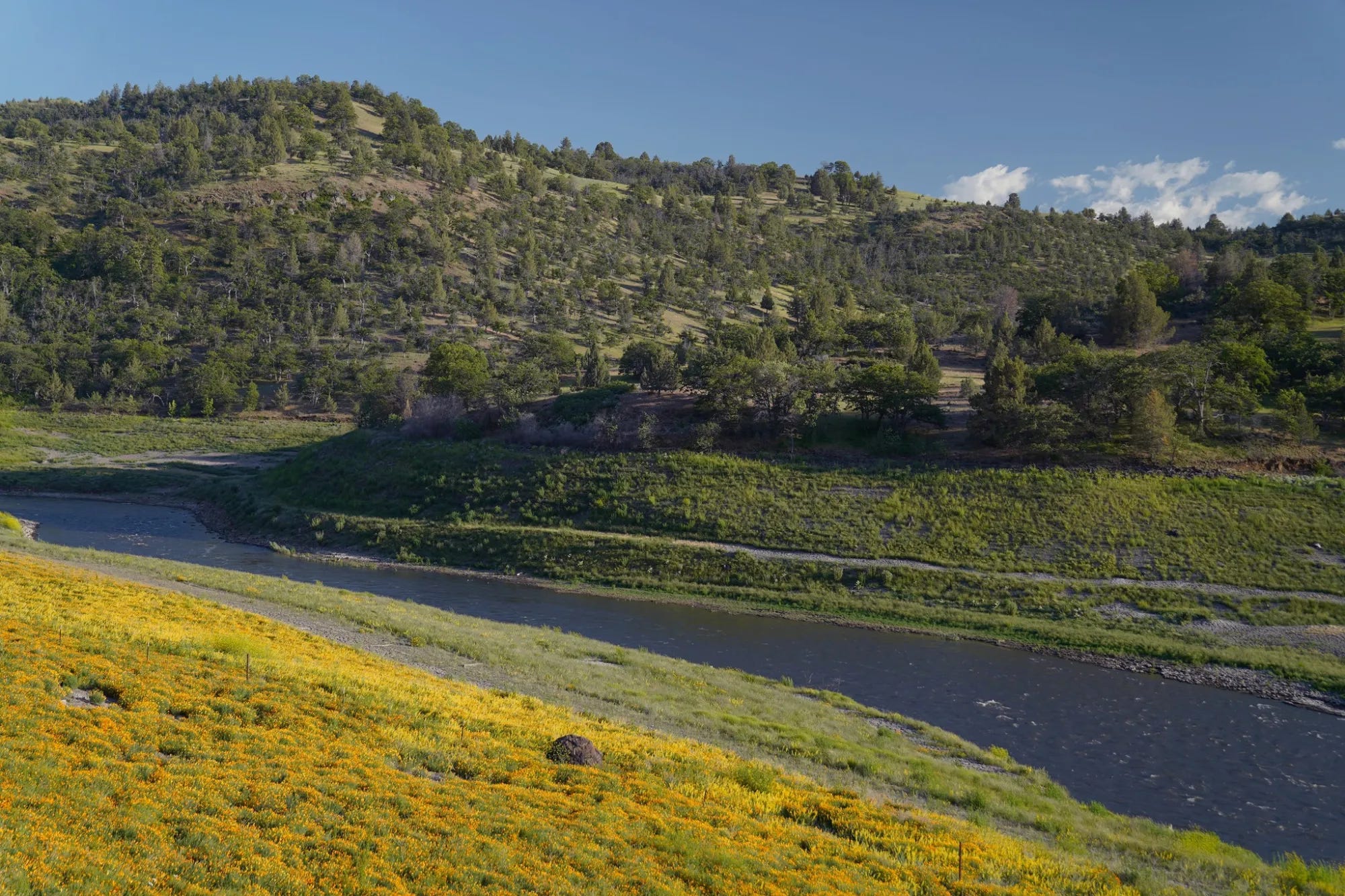
Indigenous folks and wildlife and fishery agencies are working together to monitor the comeback and continue to restore vegetation, which helps hold the sediment uncovered by the draining of dam reservoirs. Image credit: Dylan Aubrey, Yurok Tribe, via Underscore News.
Danish millionaire rewilding farmland. Jacob Jelsing, a Danish scientist whose research helped develop GLP-1 drugs, wanted to use his money for good. So he decided to help heal Danish fjords and waterways from agricultural runoff by… buying the farmland. He founded a company to purchase farmland and rewild it. His company Earthbreak, founded with his wife, oversees the projects.
I loved his frank comments, as quoted by Robert Langkjær-Bain in Imagine5, on how wealthy people ought to behave:
[Jelsing is] particularly tough on those who, like himself, have the money to make a sizeable impact. “There’s a lot of wealth in Danish society,” he says. “But the hundred richest Danes… they’re more focused on whether they can move up that stupid ladder instead of actually doing something good with their money.”
This Tik Tok from Jacob Simon seems to be based on the Imagine5 article linked above.
More good news about agrovoltaics.
The research on combining solar farms with agriculture continues to support the enormous benefits of agrovoltaics. From the abstract of a new study:
Agrivoltaics not only promotes more efficient land use but also reduces water demand and carbon emissions by partially shading crops, thereby mitigating the negative effects of climate change on yield and irrigation needs. It is clear that agrivoltaics is a multidimensional solution with far-reaching global implications.
Want some numbers on that? “Agrivoltaics can add 1800+ million tonnes to global crop yields annually.” “Over 2.1 billion people could be fed yearly with surplus AVS crop production.” “Agrivoltaics may generate over $1 trillion in added global agricultural income.”
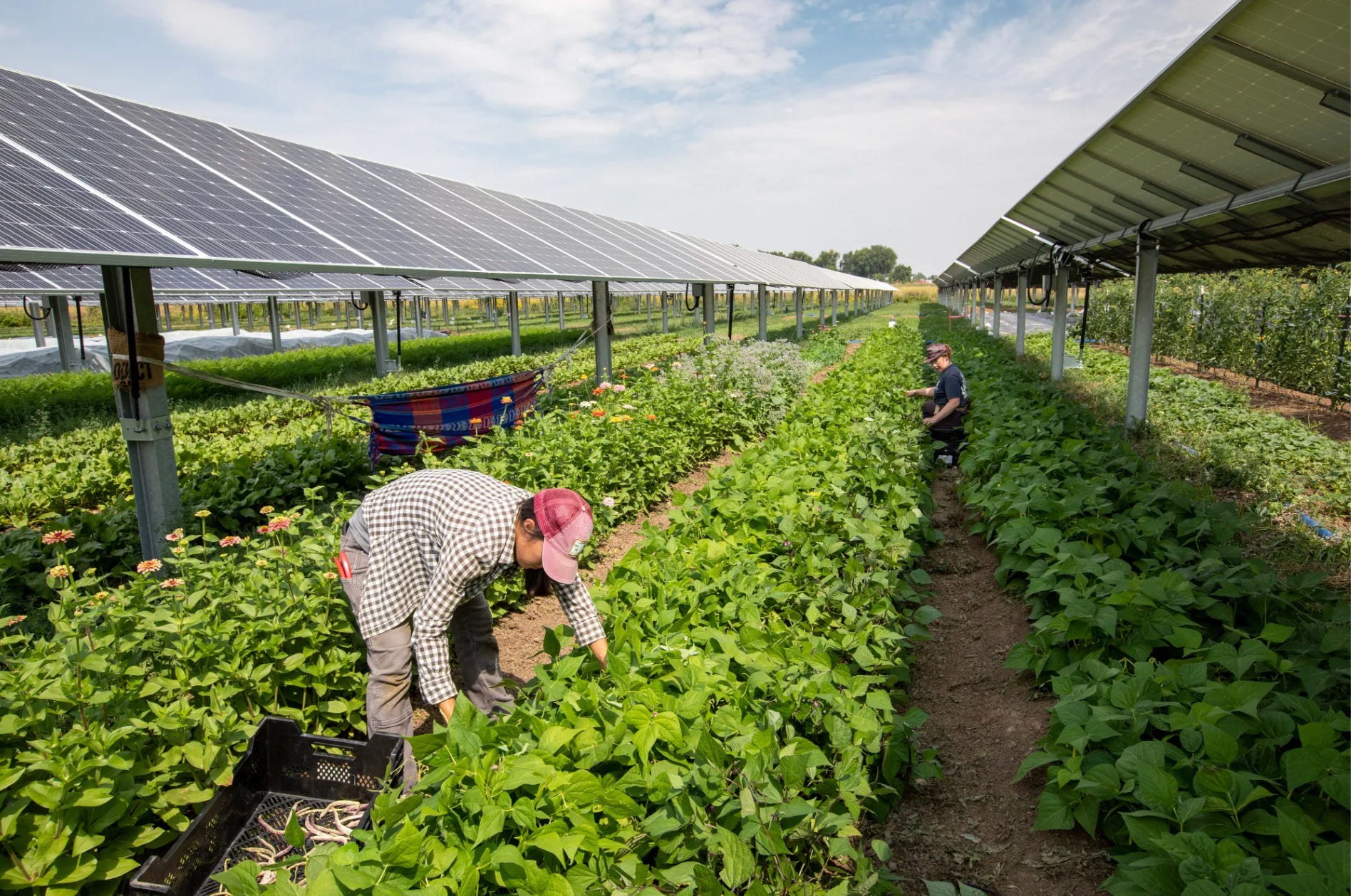
Image credit: Berkeley Food Institute.
Regenerative farming for local distilling.
In Madison, Wisconsin, State Line Distillery is helping create a “farm-to-glass” process. They’re partnering with local, organic farmers to grow and process the grains for their booze, like winter wheat and barley. Partnering with local farmers gives them an option to grow something other than commodity corn and soy for agribusiness and helps them take better care of their soil. Not only that, but the distillery waste circles back to farmers:
Instead of the waste from the distilling process being thrown out, all of the leftover product is then sent back to farmers to be used for feeding livestock…. By the end of the process, no waste has been produced from the raw materials, and all resources and benefits are kept within communities in the Driftless Region.
This story was written for Inside Climate News by a grad student intern, Sarah Mattalian. Shout out to young climate journalists!
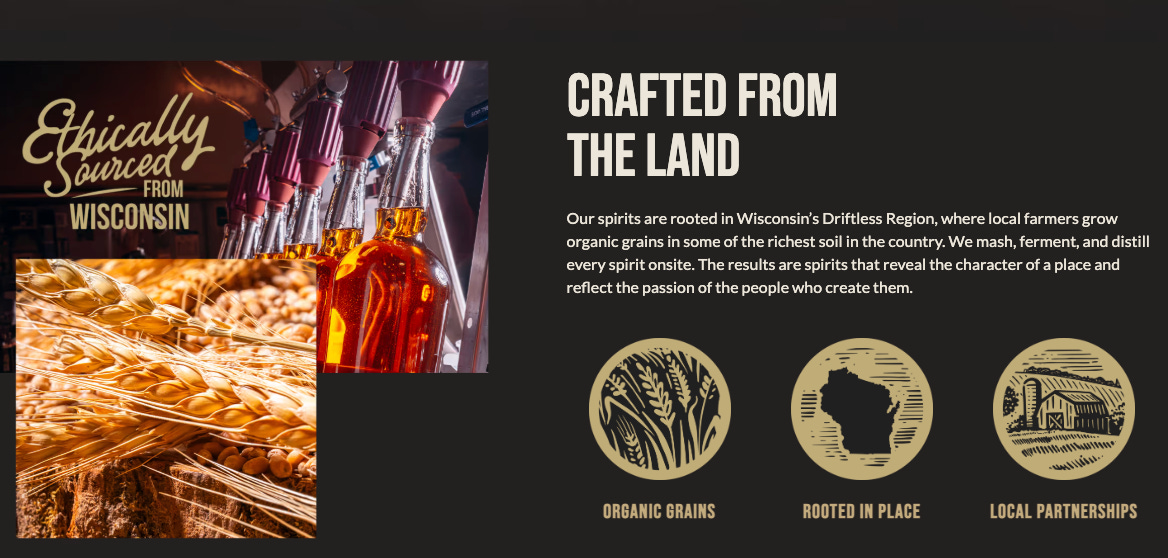
From the State Line Distillery website.
Swift bricks in Scotland.
Finally, this sweet story of people learning to regard creatures as neighbors in order to help them thrive. Swift populations have been down 60% since 1995 in Scotland, and they’re on the “Red List” of threatened and endangered species, so the Scottish parliament just passed a law requiring that new buildings include “swift bricks”—a special brick with a nifty little nesting hole for swifts. They cost about £35 each. According to The Guardian, despite four years of pressure, England and Wales have been balking in passing similar requirements.
Here’s Sam Bentley covering the story with his usual delightful cheerfulness.
Refugia Sightings
Our sighting today is a work-with-nature story too. Spouse Ron just got back from a jaunt to Florida with the A Rocha USA staff and board. While there, they visited Echo’s North America Impact Center, a global demonstration farm and seed bank. Echo is a wonderful organization that Ron and I have been sending a few spare dollars to every year for decades. Echo equips and empowers people in over 190 countries around the world “by teaching small-scale, sustainable farming methods so families can provide for themselves and their communities. By tackling hunger at the source, we’re growing hope from the ground up.”
They are a Christian organization, combining agroecology, inventiveness, and lots of experimenting. They develop and distribute seeds, experiment with farming techniques, help missionaries help the farmers they serve, and figure out better ways for people to grow locally and culturally appropriate crops with minimal resources. Their original lab and demonstration site is in Ft. Meyers, Florida, though they now have six sites across the globe.
Ron was most excited to learn about Farmer Managed Natural Regeneration, or FMNR. (Tony Rinaudo, author of the book The Forest Underground, pioneered this technique.) This is a way for low-resource farmers to manage their land for better yields, long-term sustainability, and climate resilience. The techniques include, for instance, coppicing acacia trees (pruning back the trunks), which sends nutrients back into the tree’s root systems and back into the soil. The tree keeps growing, keeps providing shade for crops, and the farmer can use the coppiced wood for fuel. This practice helps farmers enrich their soil from the ground up rather than from the surface down.
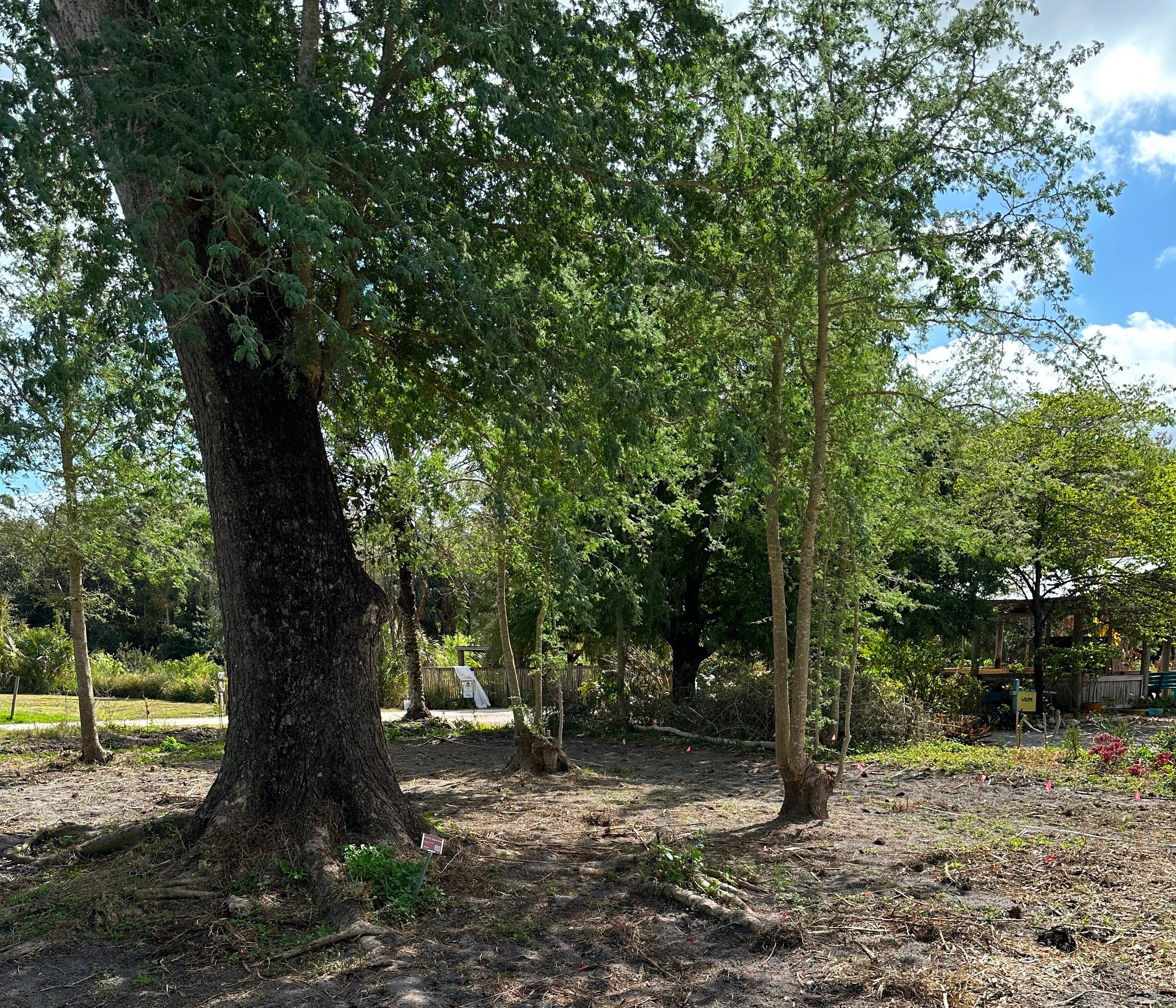
An uncoppiced and coppiced acacia tree on Echo’s demonstration site.
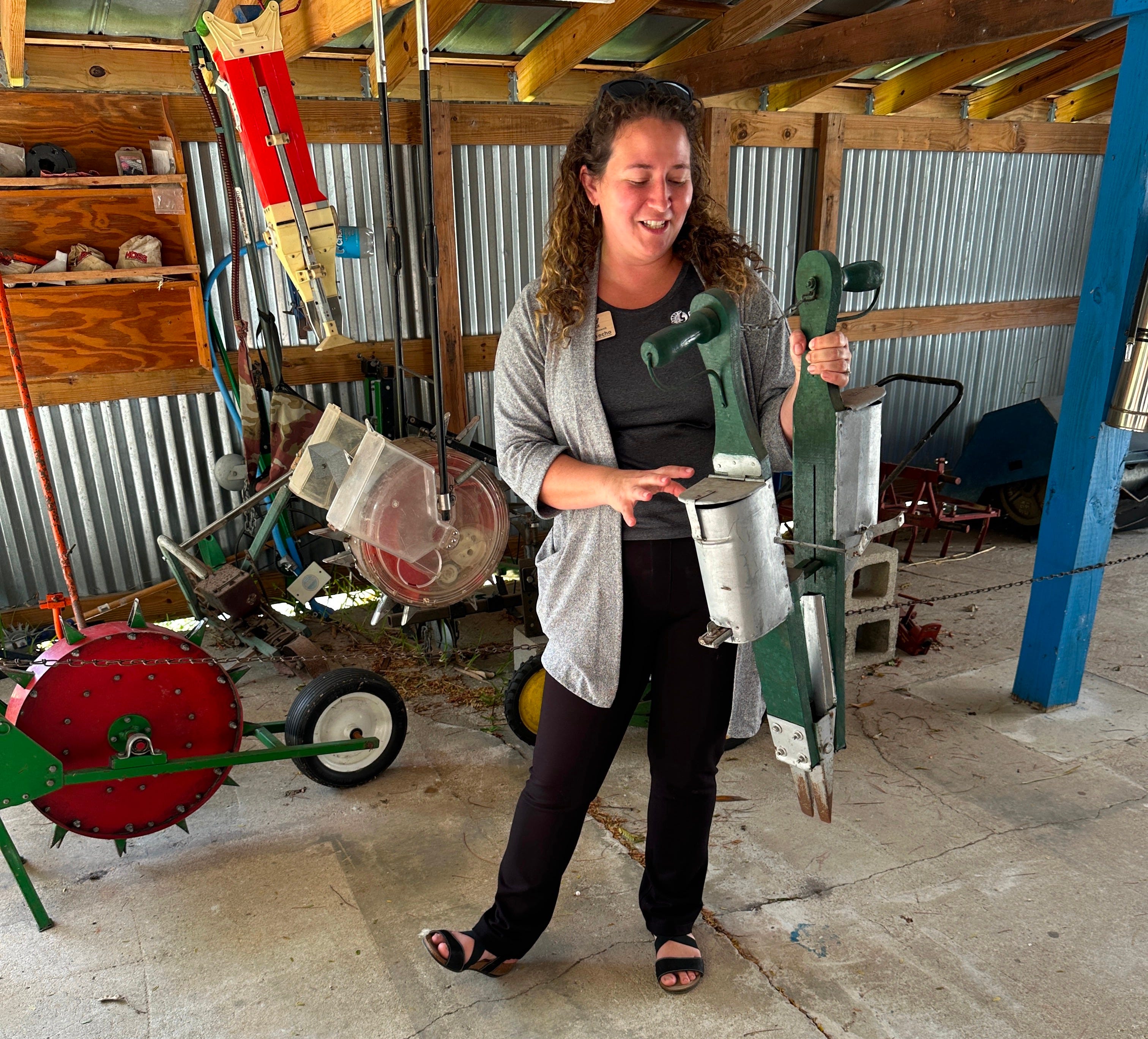
Stacy Swartz of Echo demonstrates an inexpensive, easy-to-make device for planting and fertilizing seed for no-till farming.
Thank goodness for orgs like Echo. They’ve been helping people create and nurture refugia for decades, for people and ecosystems.
Just for Joy
More nature photos! Thanks to Ron for sharing these images he took while visiting the Orlando Wetlands.
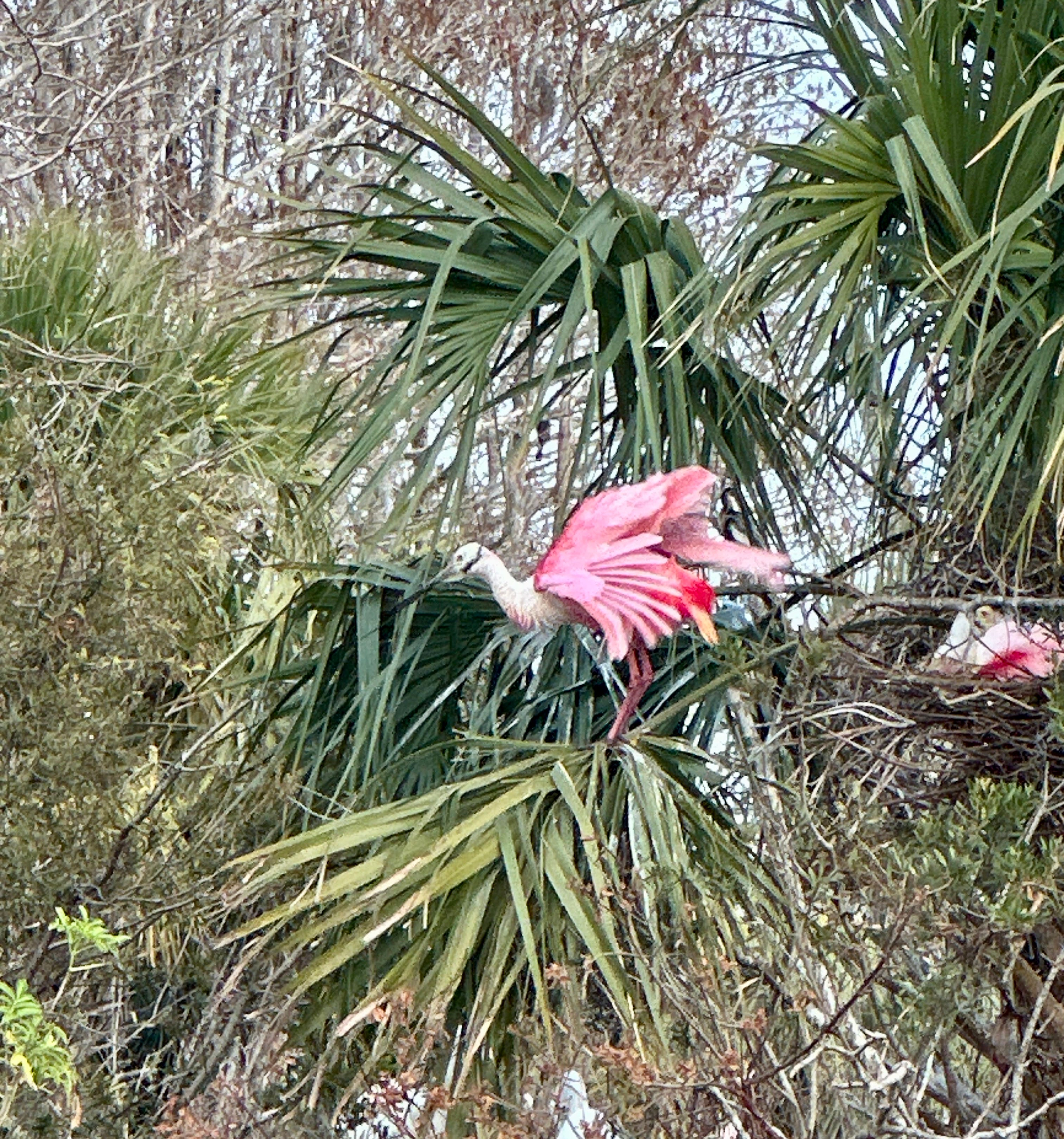
A roseate spoonbill showing off that fabulous pink plumage.
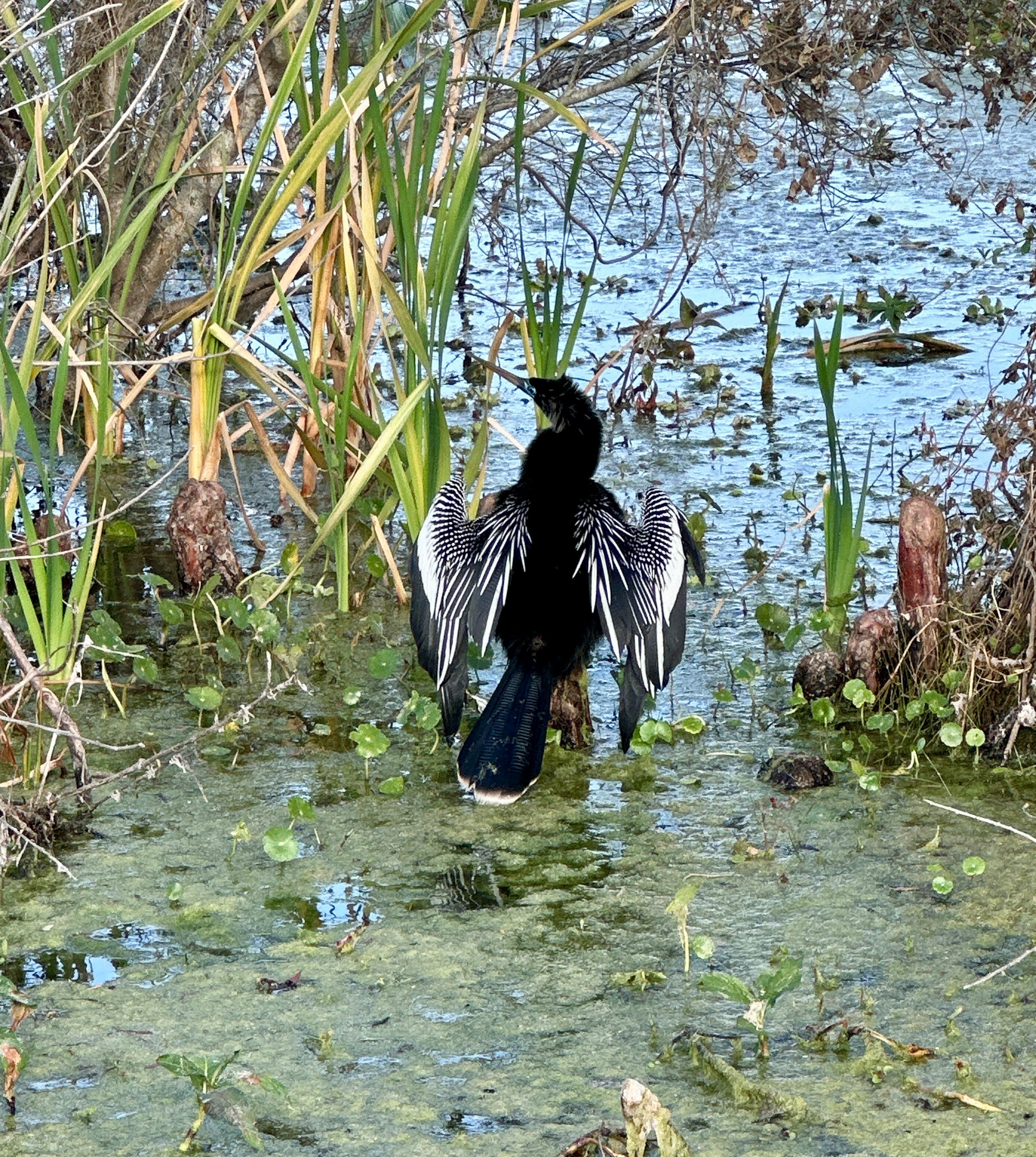
Not to be outdone, the anhinga dazzles in black and white.
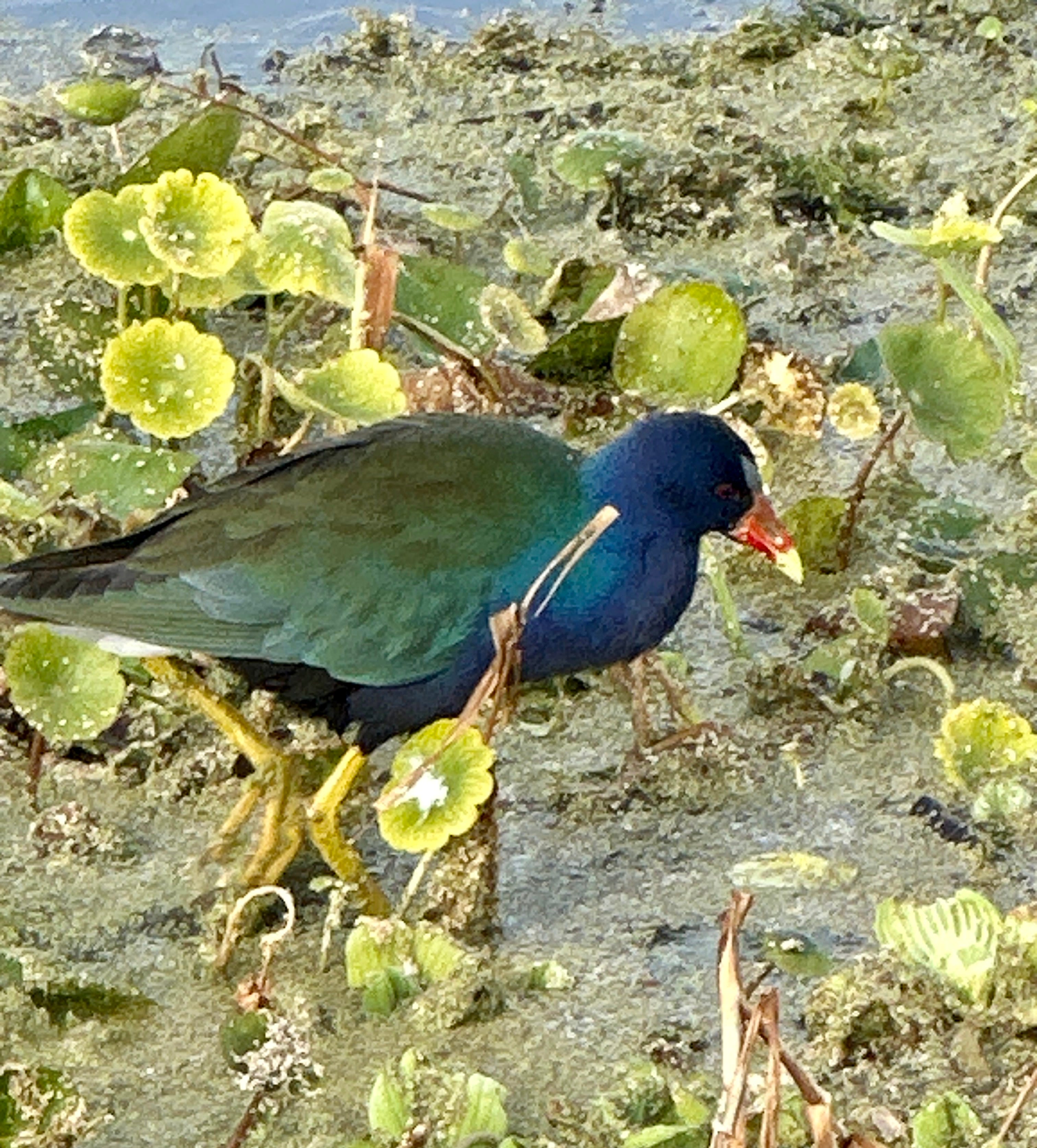
This purple gallinule knows that bright green sets off those purple-blue-turquoise shades, not to mention that beak!
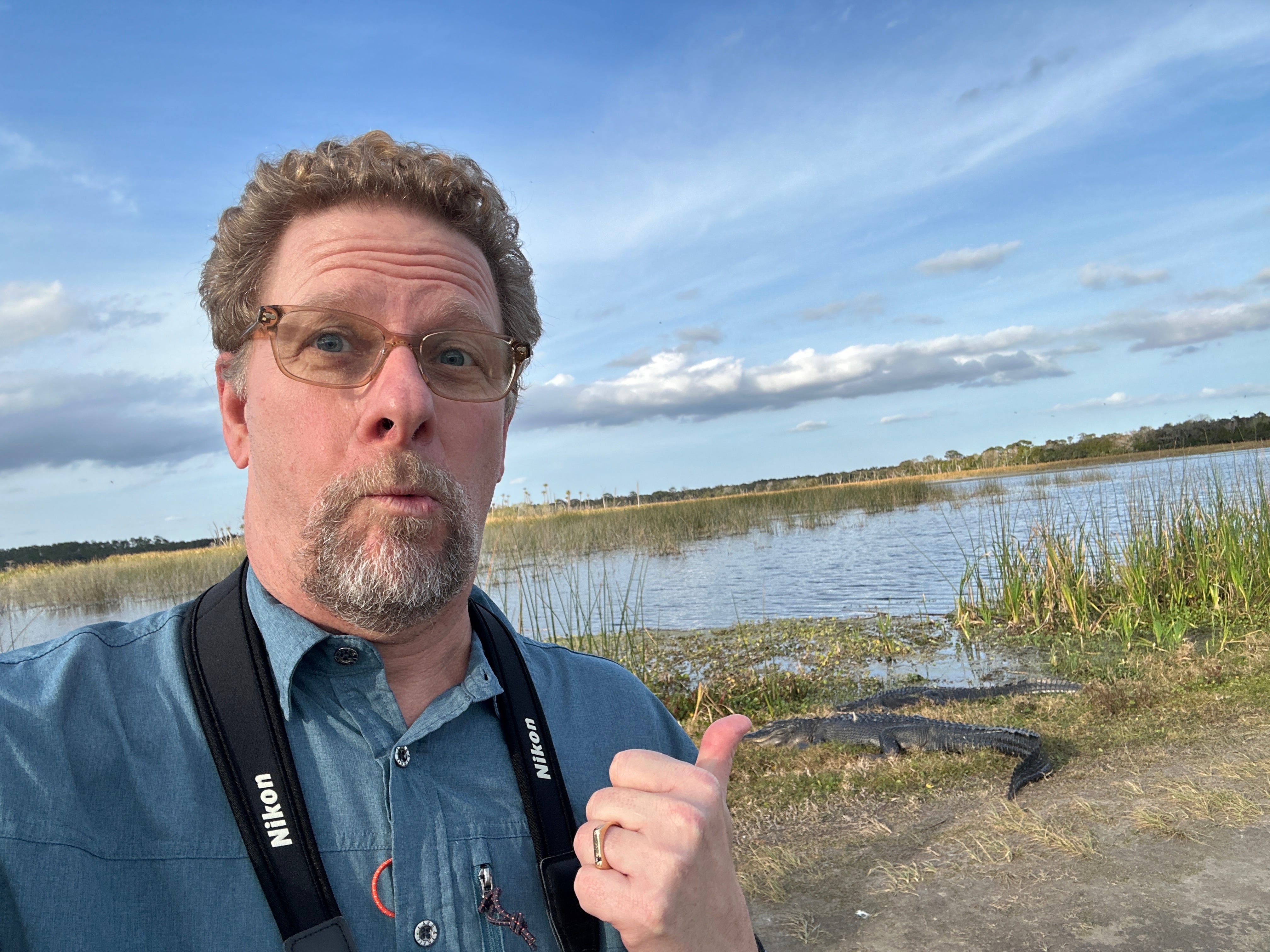
Ron assuring me he is keeping an appropriate distance from alligators (still too close for me!).

Back here in Michigan, my daughter and son-in-law’s doggie Anza is hanging out with us this weekend. This particular species, Germanshepherdus operaticus, has a lot to say—or sing, really. She sends her greetings.
As always, thanks for reading. Till next time, be well.
Note: Bold in quotations is added unless otherwise indicated.
I loved this edition- as always. I was especially encouraged to hear how resilient some animal populations can be when humans leave them alone. I'd like to know more about the Echo North American Impact Center in Fort Meyers. Can people (like us) arrange to visit?
It's always a joy to read the positive work around the world. It keeps me going.